
For property managers

The pool visit should reduce admin, not create more.

The situation

The real problem is not just the pool

At a managed property, the person beside the water is rarely the person approving the work. The tenant reports the symptom, the owner decides, the contractor needs access and the property manager connects the facts.

Vague reports make that harder. A useful service record should say what was checked or changed, what needs approval and who must act next.

Property managers are balancing three practical needs:

  • The tenant needs a usable pool and timely updates.
  • The owner needs the asset looked after and costs explained.
  • The agency needs clear access, useful records and an agreed scope.

Pool care cannot resolve tenancy or asset-management decisions, but clear roles and reporting can reduce the back-and-forth.

Make the comparison useful

What a professional managed-property service should make clear

01

Access

Who provides lawful access? Does the tenant need notice? Are keys, gate codes, pets, alarms and restricted areas documented? What happens if access is unavailable when the technician arrives?

The pool-maintenance agreement should sit alongside the agency’s entry and privacy process, not override it.

02

Service scope

What is included in the recurring visit? Separate routine water checks, cleaning, baskets, relevant filter care and equipment observations from green-pool recovery, parts, repairs, specialist chemicals, return visits and licensed work.

03

Authority

What may the technician do within the agreed service? What dollar or scope threshold needs owner approval? Who is authorised to approve when the portfolio manager is away? A clear boundary protects the owner, agency and contractor.

04

Visit record

Who receives the report, and what does it contain? A useful record can show the work completed, relevant test information, chemicals added, photos, observations and the next action. It should distinguish “noted” from “requires approval” and “requires urgent attention”.

05

Issue escalation

How are equipment faults, water-condition changes, access failures and safety observations communicated? Which channel is used, who receives it, and what happens if the first contact is unavailable? Do not accept “we will let someone know” as the whole process.

06

Invoice path

Confirm the billing entity, reference fields, property identifier, purchase-order requirement, statement cycle and where approved extras appear. The person approving the work should be able to connect the invoice to the visit and decision.

07

Continuity and backup

Ask who normally attends and what happens during leave, illness, severe weather or peak summer demand. Endless Summer is owner-led, but no same-person or backup promise should be published until Nik confirms the operating model.

08

Professional boundaries

Routine maintenance is not a pool-safety inspection, electrical diagnosis, plumbing certification, building approval or legal assessment of the tenancy agreement. A credible provider should recognise the boundary and refer the right work rather than quietly stretching the service scope.

Why Nik

Why Nik's experience is relevant to a property manager

Nik’s background spans aquatic facilities, recreation, lifeguarding and pool operations. The value for a managed property is the way he thinks about the whole site.

At a managed property, the pool is not an isolated cleaning job. It is an asset with users, equipment, access constraints and a chain of people who need information. Nik has described recording the work, photos and chemicals added, then sharing that record with the client or builder. Subject to current approval, that directly supports the property manager’s need for a useful paper trail.

As an owner-operator, the person discussing the pool is also looking at the system. That can reduce handovers between a front desk, changing technicians and the property manager, supported by an honest capacity and backup plan.

A useful comparison

Fewer gaps between the visit and the decision

01

Before the first recurring visit

The property should be assessed for route fit, pool and spa systems, current condition, vegetation, access, tenant communication, report recipient, invoice requirements and authority limits.

The aim is not to accept every address. It is to build an arrangement that can be delivered consistently.

02

At the visit

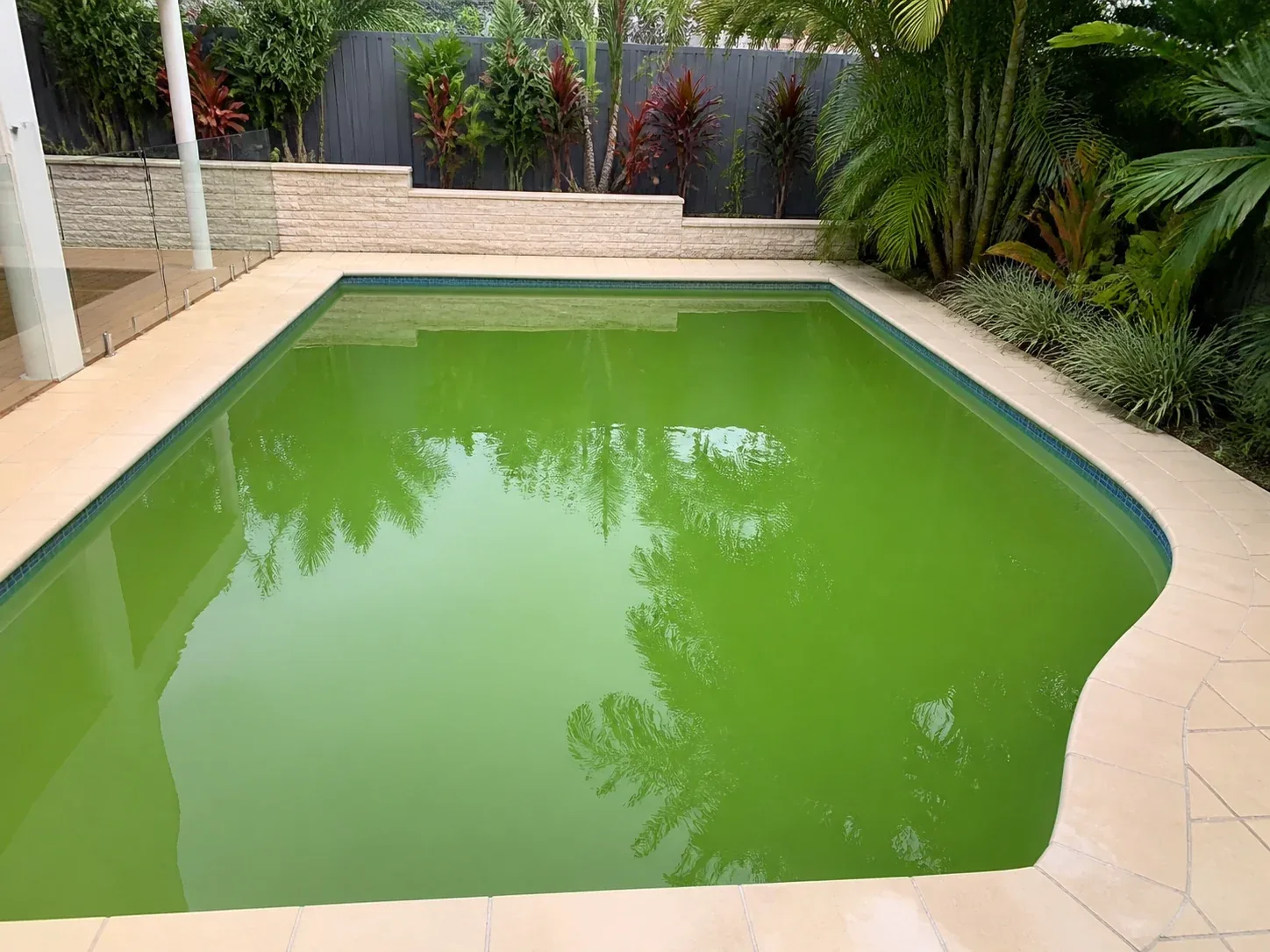
The technician completes the agreed scope, records relevant observations and separates routine work from anything needing a new decision. If the pool is outside the service baseline—green, not circulating, contaminated, inaccessible or affected by an equipment fault—the report should say so plainly.

03

After the visit

The right person receives enough context to act. “Pump issue” is less useful than a description of the symptom, what was checked, whether circulation is affected and the recommended next step. The provider should not make a safety or warranty conclusion outside their scope.

Local lens · from the sand to the hinterland

Three ways to make pool maintenance easier to manage

Pools across one portfolio can face very different conditions. These three practices help property managers reduce avoidable follow-up and make owner decisions easier.

01

Plan for weather and peak demand

Agree how urgent issues, heavy rain and consecutive hot days are triaged and communicated, so routine maintenance and genuine urgency are not treated the same.

02

Make access and authority clear

Keep gate, alarm and pet instructions, the owner approval limit, tenant contact and a backup contact with the property record.

03

Ask for decision-ready visit records

A useful record connects the property and date to the work completed, relevant observations, photos where useful, and the next action or approval required.

Take this with you

A provider-comparison checklist for property managers

1
Ask each prospective pool-maintenance provider:
2
Which properties and systems are a good fit for your service?
3
Who attends, and who is the operational contact?
4
How do you manage lawful access and failed access?
5
What is included in a routine visit, and what always needs a separate quote?
6
What water, chemical, cleaning and equipment information is recorded?
7
Can we see a redacted sample report before appointment?
8
How do you distinguish an observation, a recommendation and an urgent issue?
9
Who can approve extra work, and how is that authority recorded?
10
How are invoices matched to properties and service records?
11
Which repairs are completed in-house, and which are referred to licensed trades?
12
What happens during leave, illness, bad weather and summer peaks?
13
What insurance, licences and professional boundaries apply to the proposed scope?

Take this with you

A sensible onboarding brief

1
Before asking for a proposal, have the following ready:
2
Property address and type
3
Pool and spa type, approximate size and known systems
4
Current service frequency and known issues
5
Tenant or onsite contact process
6
Entry-notice and access requirements
7
Gate, key, alarm, pet and restricted-area information
8
Report recipients and required property reference
9
Invoice recipient and purchase-order rules
10
Owner or agency approval limit
11
Preferred escalation contact and backup
12
Known warranties, manuals and current contractors
13
Any existing pool-safety certificate or compliance contact, kept separate from maintenance

Straight answers

Property manager FAQs

Open each answer before you decide what the pool needs.

At minimum, ask for the visit date, work completed, relevant observations, chemicals added where applicable, photos that explain rather than decorate, and any next action. The report should identify whether an item is information only, needs approval or needs a different qualified person.

The tenancy agreement and special terms should make responsibilities clear. Queensland’s Residential Tenancies Authority says owners/managers and tenants should work together on pool safety and maintenance, and that professional maintenance contracts should be reflected in the agreement. Obtain advice for the specific tenancy.

The RTA states that if the tenant is responsible for cleaning the pool, they cannot be required to use a specific business. A maintenance contract arranged and paid for by the owner/manager is a different situation and should be included in the tenancy agreement.

Only a QBCC-licensed pool safety inspector can issue a Queensland pool safety certificate. Routine maintenance may reveal an issue worth flagging, but that is not a formal inspection or certification.

Frequency should follow the pool, equipment, vegetation, tenant responsibilities, season and risk profile. The decision should be documented rather than chosen from a generic menu. Hotels, shared pools and commercially used facilities may have different operational and public-health needs from a private residential pool.

That should move into an assessment and approval path rather than being hidden inside a normal visit. The manager needs to know whether circulation is affected, whether the pool should remain unused, what work is proposed and whether a specialist is required. Do not promise emergency response until the operating standard is approved.

The public wording must wait for written approval of current prices, included chemical types and limits, pool eligibility, parts, specialist chemicals, return visits and extra-charge triggers. These terms should be explicit in any managed-property proposal.

A routine technician can note something visible—such as a gate not latching or a damaged CPR sign—but should not describe that observation as a compliance inspection. The manager should have a separate, approved path to a licensed pool safety inspector or relevant trade.

Endless Summer is currently owner-led and Nik personally described receiving enquiries and attending jobs. A “same person every time” promise and backup coverage remain unconfirmed, so the final agreement should state the actual arrangement.

Provide the suburb, property type, pool and spa systems, current service, access process, known issue, report and invoice needs, authority contact and whether the enquiry is for one property or a portfolio. That lets Nik assess fit before either side spends time building the wrong proposal.

The next useful step

Give the owner a clearer decision.

Start with the property, not a generic package. Share the address, access arrangement, pool systems, current service and the way your agency needs reports, approvals and invoices handled. Nik will call to discuss whether the property fits the current route and operating model. Discuss a managed property | Call Nik