For guest accommodation

A guest-facing pool needs more than a quick clean.

The situation

When the guest calendar and the pool are out of step

At a holiday property, hotel or resort, the pool is both part of the guest experience and an operating responsibility. Use can shift from a quiet midweek stay to a full house over a hot weekend, while the person noticing a problem may not be the person approving work.

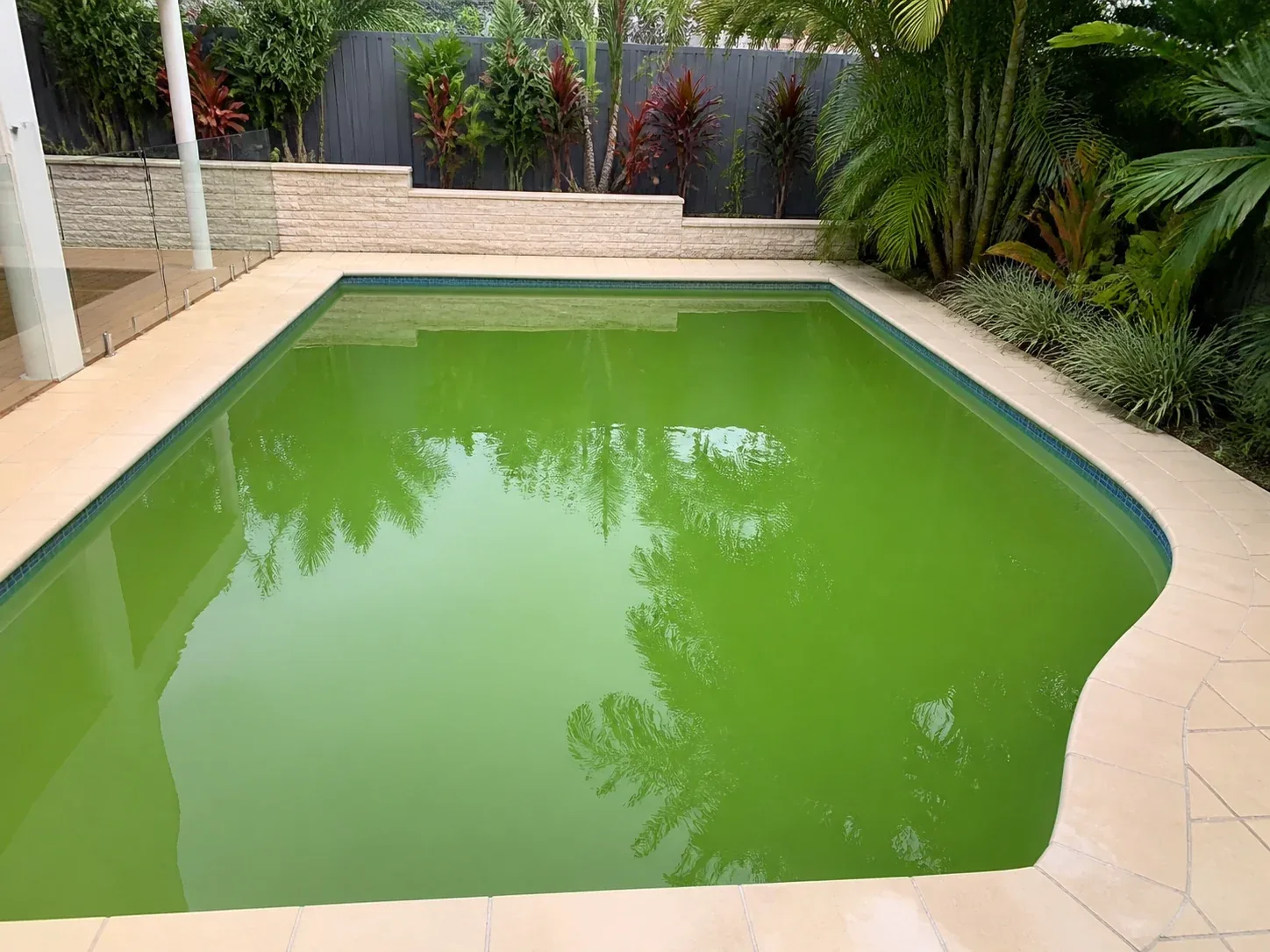
Changing swimmer loads bring sunscreen, cosmetics, dirt and debris. Warm weather and school-holiday demand can coincide with heavy rain or equipment stress. If every week is treated the same—or servicing relies on a visual check—a developing circulation or water-quality issue may remain unnoticed until a guest complains.

The useful answer is an operating plan: service frequency matched to the property, clear onsite responsibilities, useful records, agreed escalation and a realistic response when the pool leaves its normal baseline.

Make the comparison useful

What to look for in a guest-property pool service

01

Property fit before price
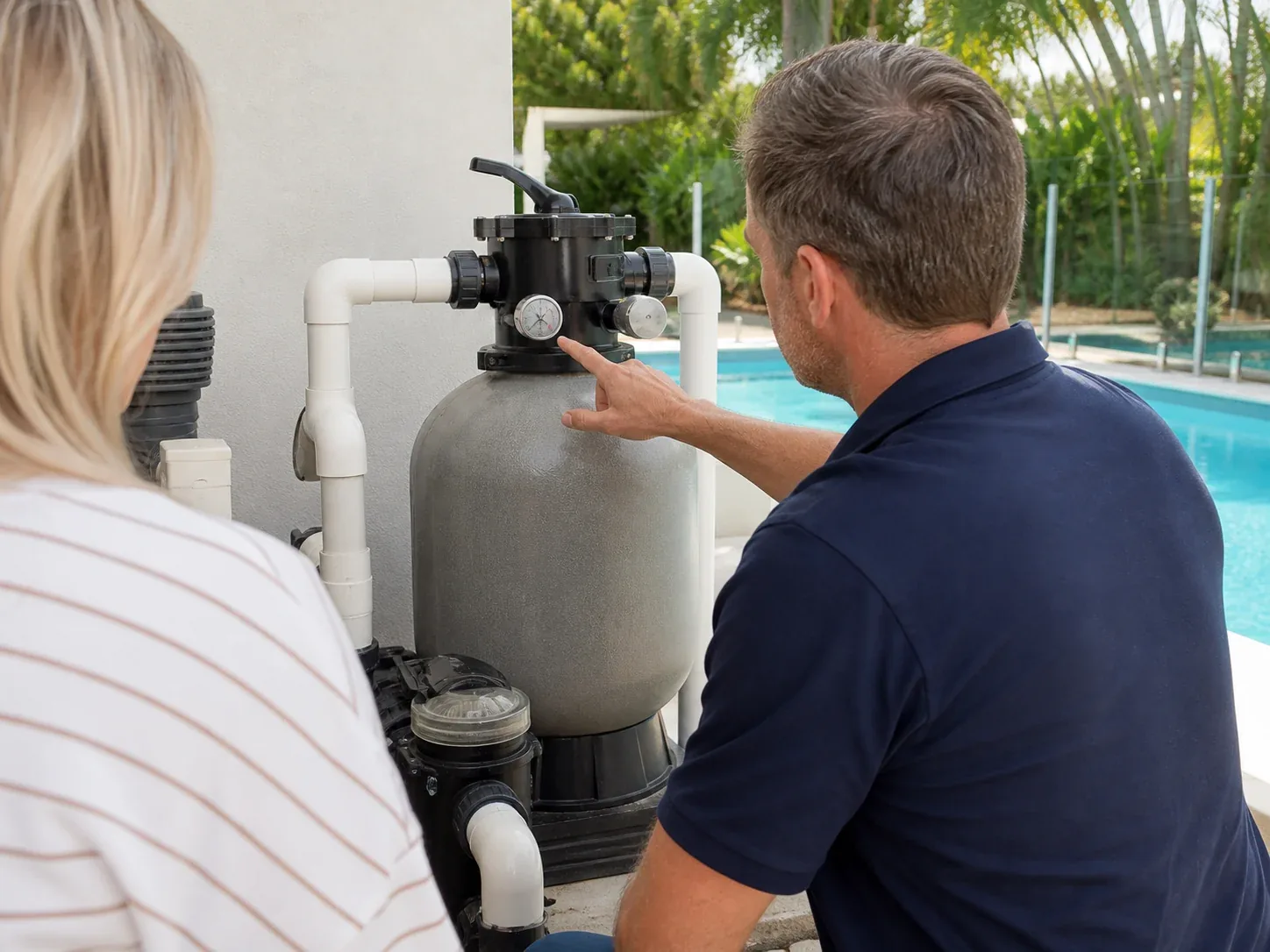
A holiday house, apartment complex, motel, hotel and resort may sit under different operational, planning, public-health and pool-safety requirements. The provider should ask what the property is and how the pool is used before quoting a domestic-style package.

02

A service pattern tied to occupancy

Ask how the proposed frequency accounts for weekends, school holidays, events, turnovers and seasonal peaks. A fixed schedule may still work, but the reasoning should be clear and the operator must understand what the onsite team does between visits.

03

Water-quality records that match the property

Queensland Health’s Water Quality Guidelines for Public Aquatic Facilities apply to facilities commonly used by the public and include aquatic facilities associated with holiday accommodation. The property operator remains responsible for identifying the requirements that apply. A maintenance provider should not imply that a domestic service report automatically satisfies public-facility obligations.

04

A contamination and incident path

The operator should know who acts if there is a faecal incident, vomit, suspected contamination, prolonged equipment failure or water outside the accepted operating criteria. Incident response is not the moment to invent responsibilities. Queensland Health provides specific guidance for public aquatic facilities; the site’s own risk and operating process should be reviewed by competent people.

05

Access that works around guests

Agree service areas, plant-room access, gate codes, noise-sensitive times, cleaning or turnover schedules and the onsite contact. The provider should know how to attend without compromising guest privacy or leaving equipment and gates unsecured.

06

A clear chain of authority

Identify the person who receives routine records, the person who approves extra work, the backup contact and the point at which the pool should be taken out of use. Do not place a pool technician in the position of making commercial or legal decisions for the operator.

07

Evidence that explains the visit

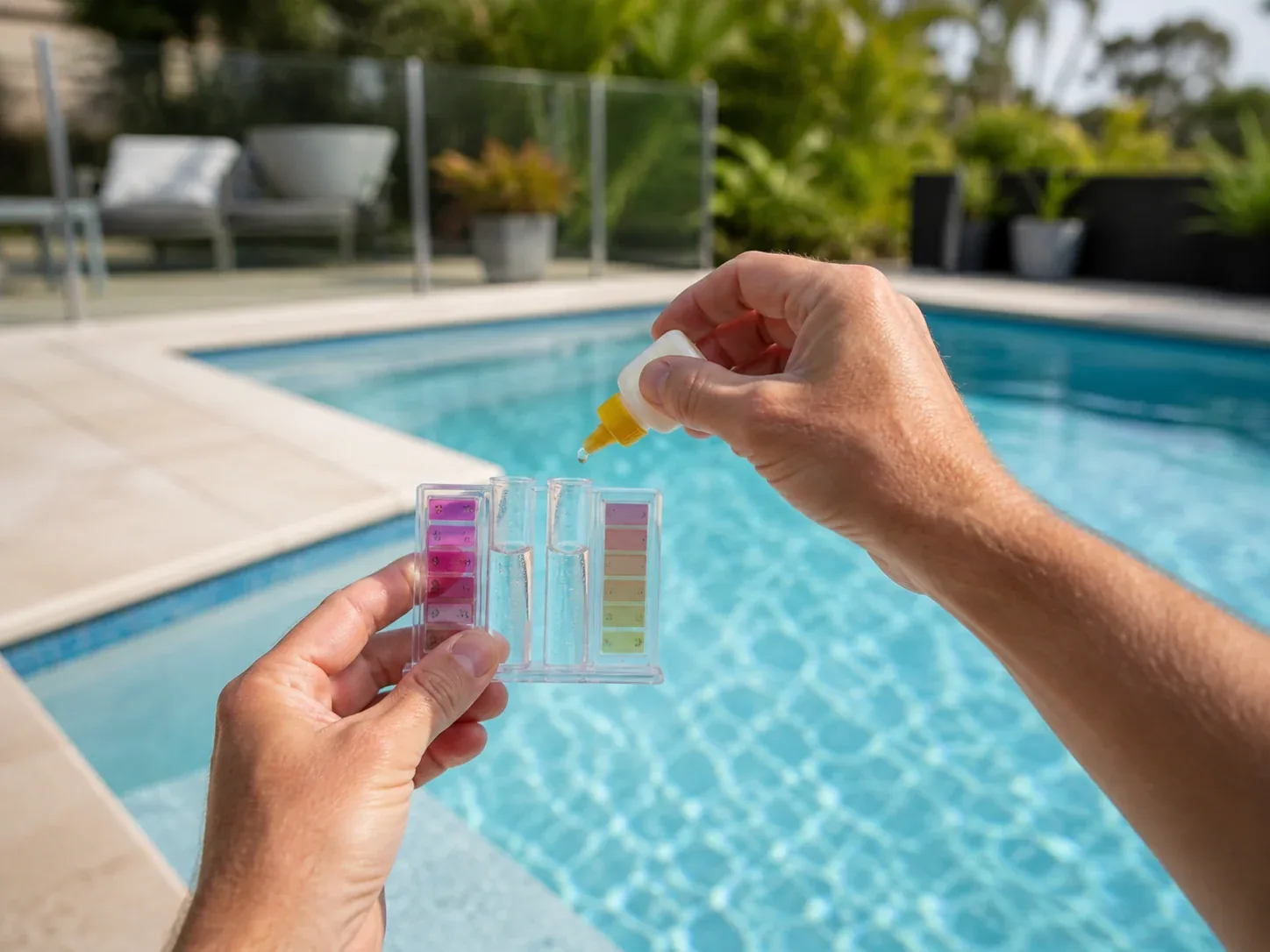
A useful record should show what was done, relevant water and equipment observations, chemicals added where applicable, photos and the next action. The operator should be able to connect that record to the property, date and decision.

08

Honest capacity and backup

Peak guest periods can coincide with peak pool-service demand. Ask what the provider can reliably cover, what happens when the usual technician is unavailable and which faults are referred. Do not treat a mobile number as a guaranteed emergency service.

Why Nik

Why Nik's experience matters to a guest-facing property

Nik has worked around aquatic facilities, recreation, lifeguarding and pool operations. The exact venues, years and qualifications need final evidence and approval, but the experience matters because a guest-facing pool is an operating environment used by people—not simply a backyard that needs to look blue.

That background encourages a wider view: swimmer load, circulation, filtration, water condition, plant-room organisation, records and the consequences of a problem being missed. Nik has also described experience across different sanitation systems and larger pool environments. The final page should use only the specific systems and scale that Nik approves and can currently support.

For the operator, the value is not a biography for its own sake. It is a technician who understands why the same pool can behave differently as occupancy, weather and equipment demand change—and who can explain the next decision in practical terms.

Local lens · from the sand to the hinterland

Three ways to protect the guest experience between visits

Sunshine Coast and Noosa accommodation pools can face their highest swimmer loads during hot, wet and busy holiday periods. These three practices help the onsite team and pool technician work from the same plan.

01

Match service timing to occupancy

Share turnover days, peak periods, events and the onsite check routine so the service pattern reflects actual bather load.

02

Set an incident path before guests arrive

Agree who takes the pool out of use, who is contacted and who can approve urgent work after contamination, equipment failure or water outside operating criteria.

03

Keep records people can act on

Connect water and equipment observations, chemicals added, photos, the next action and any approval need to the property and visit date.

Take this with you

A stronger property briefing conversation

1
Before a service promise is made, discuss:
2
Property and accommodation type
3
Whether the pool is private to one dwelling, shared or commonly used by guests
4
Pool, spa and water-feature size and systems
5
Current operating plan, test records and known issues
6
Typical and peak occupancy
7
High-use dates, events and turnover rhythm
8
Onsite team responsibilities between visits
9
Plant-room, gate, alarm and key access
10
Routine report recipient and approval contact
11
Incident, contamination and out-of-use decision process
12
Existing pool-safety inspector, licensed trades and equipment contractors
13
Invoice, property-reference and purchase-order requirements
14
Route, service-frequency and capacity fit

Take this with you

Questions to ask any hotel or holiday-pool provider

1
Which accommodation and pool types do you currently support?
2
How do you assess a new property before proposing a schedule?
3
How does the plan change for high occupancy, school holidays or events?
4
What does the routine visit include, and what sits outside it?
5
What water-quality and service records do you provide?
6
How do you handle an abnormal result, contamination report or equipment failure?
7
Who is responsible for deciding the pool should close or reopen?
8
How do you work with onsite staff and protect guest access and privacy?
9
What extra work requires approval, and how is it quoted?
10
Which work needs a licensed inspector, electrician, plumber or other specialist?
11
What happens if the usual technician is unavailable?
12
Can the provider show evidence from a comparable property without breaching another client’s privacy?

Straight answers

Hotels & holiday accommodation FAQs

Open each answer before you decide what the pool needs.

Not always. Use pattern, responsibility, record keeping and applicable public-health or local requirements can differ. Queensland Health’s public aquatic facility guidelines include some pools associated with holiday accommodation. The operator should confirm which requirements apply to the property.

No guarantee should be published without defined conditions, customer responsibilities, service frequency, exclusions, timeframe and remedy. Weather, swimmer load, contamination, access and equipment failure can change a pool between visits. A credible service describes the operating process and response rather than promising an outcome it cannot control.

Potentially. The operator is responsible for the property’s requirements and safe operation. A contractor visit does not automatically replace onsite procedures, risk plans or records required for the facility. Review Queensland Health guidance and obtain competent advice for the property.

Treat the report as information requiring assessment, not a diagnosis. Remove the pool from use if the operator’s procedures require it, record the time and circumstances, check the water with suitable methods and follow the property’s incident process. Chloramines and pH can contribute to irritation; smell alone does not show whether the water is acceptable.

Public aquatic facilities should follow an approved contamination-response procedure. Queensland Health publishes response guidance. Do not improvise a chemical dose or reopen the pool based only on appearance.

Nik described recording work, photos and chemicals added. Before publication or contracting, approve a current sample report, fields, delivery timing, privacy handling and the difference between a maintenance record and a compliance record.

Share the property type and suburb, who uses the pool, pool and spa systems, current service and records, occupancy pattern, access, onsite contacts, known issues, approval process and the decision you need to make. Nik can then say whether a fuller site assessment is worthwhile.

The next useful step

Start with the property, the people and the operating plan.

Tell Nik what kind of accommodation it is, who uses the pool, how the site is currently managed and where the gaps are. He will call to discuss whether the property fits the route, capacity and service model—before either side makes a promise to guests. Discuss the property | Call Nik