Pool guide · water chemistry

Do sore eyes mean there is too much chlorine?

Not necessarily.

Your pool, your setting

Understand chlorine smell, pH and swimmer load before guessing at the next dose.

Red eyes, itchy skin and a strong “chlorine” smell are often blamed on too much chlorine, but discomfort and smell are not water-test results. Queensland Health explains that chlorine can react with nitrogen-containing material—mostly sweat and urine in public-facility contexts—to form chloramines, also called combined chlorine. Chloramines can irritate eyes and skin and create the strong smell swimmers often mistake for high useful-chlorine levels.

The water’s pH also matters. Water outside the suitable operating range can be uncomfortable and can affect how well chlorine works. Circulation, ventilation, swimmer load and the way the pool has been maintained all provide context.

If symptoms are significant or persist after leaving the pool, seek medical advice. If more than one swimmer is affected, or anyone develops breathing symptoms, treat it seriously and follow the operator’s incident process.

The situation

Free chlorine and combined chlorine are not the same thing

Useful pool care

Why pH changes the experience

pH describes how acidic or alkaline the water is. In a pool it matters for comfort, sanitation performance, equipment and surfaces.

Water outside its intended operating range can contribute to eye or skin irritation. It can also change how effectively chlorine works, which is why simply adding more chlorine without understanding the pH and combined-chlorine picture can be the wrong response.

Nik described this in the interview as one of the common misunderstandings around sore eyes: people jump to chlorine, while pH and the complete water condition need to be considered.

Useful pool care

What swimmers bring into the water

Every swimmer adds material to the pool, including:

  • Sweat
  • Body oils
  • Sunscreen and cosmetics
  • Dirt and fine sand
  • Hair and skin products
  • Urine and other contamination

One quiet swim and a full holiday-house weekend do not place the same demand on the water. Chlorine is consumed as it reacts, filtration has more material to remove, and the pool may need a different operating response.

Showering with soap before swimming and encouraging regular toilet breaks are practical ways to reduce the nitrogen-containing material that contributes to chloramine formation. Queensland Health includes these behaviours in its public aquatic facility guidance.

Local lens · from the sand to the hinterland

Why this matters on the Sunshine Coast

Warm weather, outdoor living and long swimming seasons can mean frequent sunscreen use and sudden increases in bather load. Family gatherings, school holidays and short-stay accommodation can turn a lightly used pool into a busy one for several days.

Warm weather, outdoor living and long swimming seasons can mean frequent sunscreen use and sudden increases in bather load. Family gatherings, school holidays and short-stay accommodation can turn a lightly used pool into a busy one for several days.

Coastal sand and wind-blown material add another filtration load. Heavy rain may dilute or overflow water and wash debris into the pool. None of those conditions proves the cause of irritation, but they are useful details to record before testing and diagnosis.

For indoor or enclosed pools, air quality is also important because chloramines can affect the air. Queensland Health highlights ventilation in relation to indoor facilities. A domestic outdoor pool and a busy indoor facility should not be treated as the same environment.

Useful pool care

What a strong chlorine smell can mean

A well-managed pool does not need to announce itself from across the yard.

A strong odour may be associated with chloramines rather than an abundance of effective free chlorine. It can also be affected by ventilation and the mix of contaminants in the water. The right response is to test and assess—not to lower or increase chlorine because of smell alone.

At a guest-facing property, record the time, swimmer load, recent additions, ventilation conditions and any symptoms. That context is important if the operator or technician needs to investigate.

Useful pool care

What swimmers can do

  • Shower with soap before entering the pool.
  • Use the toilet before swimming and take regular breaks with children.
  • Do not swim while sick with diarrhoea.
  • Keep food, excessive dirt and unnecessary contaminants out of the water.
  • Leave the pool if eye, skin or breathing irritation develops.
  • Tell the owner or operator what happened and when.
  • Seek medical advice for significant, breathing-related or persistent symptoms.

These steps help reduce contamination; they do not replace proper water treatment and operating controls.

Take this with you

What a pool owner should do

1
1. Stop guessing from smell or appearance
2
Do not use odour as a dosing instruction. Do not add several products in quick succession to chase comfort.
3
2. Record the circumstances
4
Note recent swimmer numbers, rain, sunscreen use, a party, equipment alerts, pump operation, chemical additions and whether one or several people were affected.
5
3. Test with suitable equipment
6
Use a method capable of measuring the relevant parameters and follow its directions. For a chloramine question, free and total chlorine readings are more informative than a single generic “chlorine” result. The appropriate parameters and targets must follow the actual pool and current guidance.
7
4. Check that circulation and filtration are operating
8
Water-quality correction depends on the system being able to move and filter water. Note weak flow, full baskets, controller faults or unusual pressure. Do not open pressurised or electrical equipment.
9
5. Use the approved response
10
Follow the chemical label, equipment instructions and the property’s operating plan. Public or commercially used facilities may have formal response and record requirements. Domestic owners should seek competent advice rather than borrowing a commercial dose or a neighbour’s routine.
11
6. Keep people out when the water or symptoms raise concern
12
This guide cannot declare a pool safe. If the water is outside the acceptable criteria, several swimmers are affected, breathing symptoms occur, or the operator’s plan requires closure, stop use and obtain the appropriate help.

Useful pool care

What not to do

  • Do not mix pool chemicals.
  • Do not add acid and chlorine together or near one another.
  • Do not put a product into a feeder or container unless the label permits it.
  • Do not use smell, taste or eye comfort as proof the water is safe.
  • Do not reduce disinfectant simply because someone says “too much chlorine”.
  • Do not rely on a strip or kit outside its storage life or directions.
  • Do not reopen a public or guest pool after an incident based only on clear appearance.

Useful pool care

What a good pool service should explain

A useful technician should be able to separate observation from conclusion:

  • What was measured and with which method?
  • What do the free, combined/total chlorine and pH results suggest together?
  • Is circulation and filtration operating normally?
  • Has swimmer load or contamination changed?
  • Is this a routine domestic adjustment or an incident requiring a formal response?
  • What was added, why, and what needs to happen before the next swim?
  • What should be watched or re-tested?

If the answer is simply “chlorine smell means too much chlorine”, ask for the actual test result and a fuller explanation.

Take this with you

When to call for help

1
Call when irritation affects several swimmers, the smell is persistent, the water is cloudy or discoloured, test results do not respond as expected, combined chlorine appears elevated, the pump or filter is not operating normally, or you are unsure how to use the test or product safely.
2
Seek urgent medical help for serious breathing difficulty or other severe symptoms. Public and guest-facing facilities should follow their incident and public-health procedures.

Straight answers

Sore-eyes and chlorine FAQs

Open each answer before you decide what the pool needs.

Yes, chlorine can be above the suitable range, but sore eyes alone do not prove that. A proper test and the pH, combined-chlorine, swimmer-load and operating context are needed.
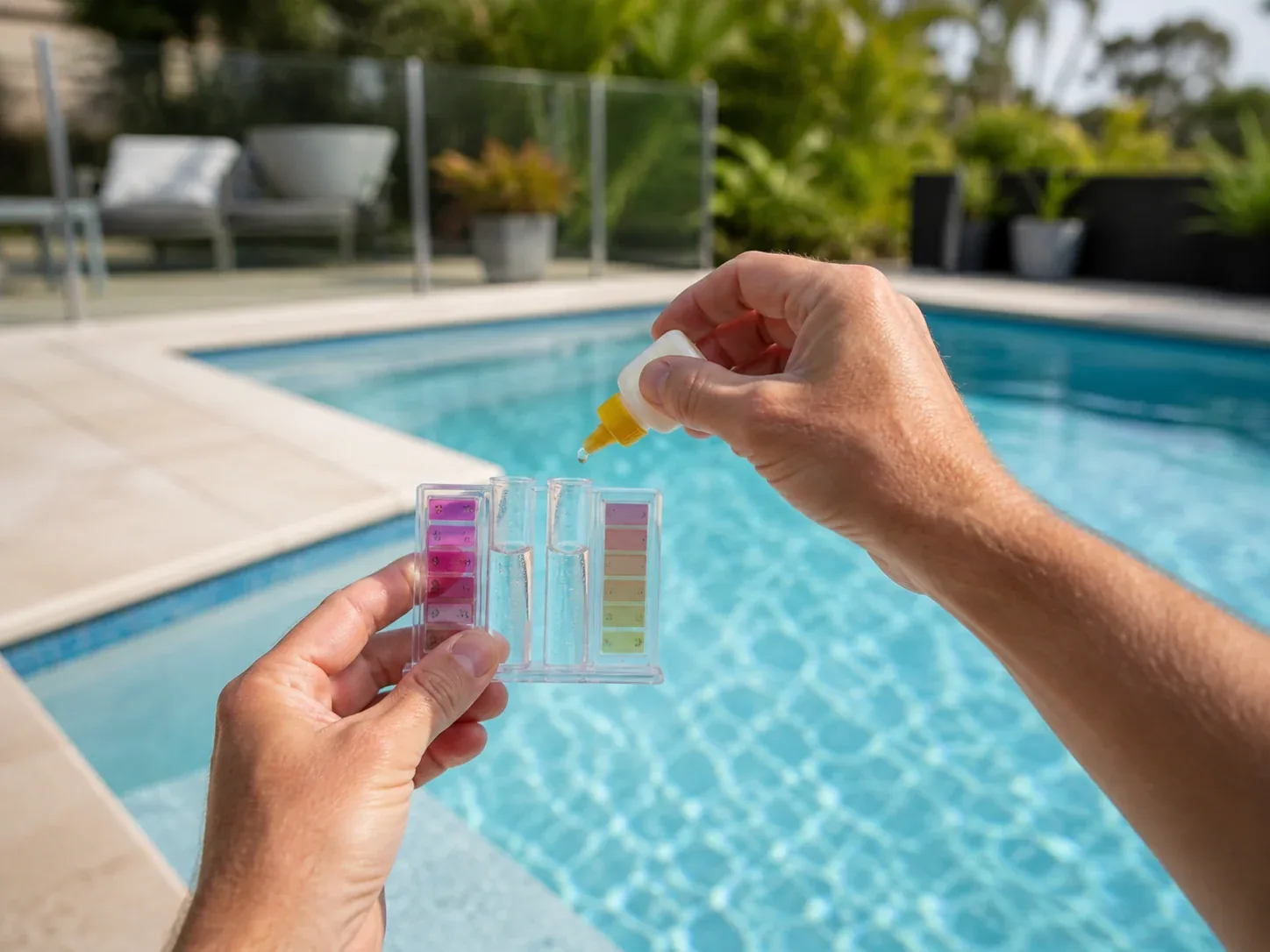
Water outside its intended pH range can contribute to irritation and can affect chlorine performance. Test rather than assuming chlorine is the only variable.

Chloramines form when chlorine reacts with certain nitrogen-containing contaminants introduced by swimmers. They are also described as combined chlorine and can contribute to eye, skin and respiratory irritation, particularly in enclosed facilities.

Urine introduces nitrogen-containing material that reacts with chlorine and can contribute to chloramine formation. It does not create a simple one-for-one result, but it increases the treatment demand and is a reason for regular toilet breaks.

A larger swimmer load adds sweat, sunscreen, cosmetics, dirt and other material. That can consume disinfectant, contribute to combined chlorine and increase filtration demand. Testing and system checks are needed to know what happened.

Not based on smell alone. Test the relevant parameters and follow an approved response. Adding product without understanding pH, free and combined chlorine, circulation and recent use can be unsafe or ineffective.

They can be useful for some routine checks when correctly stored and used, but their parameters, resolution and condition vary. A problem investigation may need a more suitable method and professional interpretation. Follow the product directions.

Share who was affected, the symptoms and timing, swimmer load, whether the pool is indoor or outdoor, recent rain, products added, current test readings, equipment alerts and whether circulation appears normal. Do not add another product before the call unless the approved operating procedure requires it.

The next useful step

Test the water. Explain the context. Then decide.

If the pool smells different, several swimmers are irritated or the test result does not make sense, tell Nik what changed. He will call to work out whether the next step is a routine water check, a system assessment or a more urgent health response. Ask Nik about the water | Call Nik

Useful pool care

Sources and review notes

  • Queensland Health, *Water Quality Guidelines for Public Aquatic Facilities*, especially the section on chloramines; use as authoritative technical context and distinguish public from domestic pools.
  • Queensland Health, “Pools, spas and other recreational water bodies”.
  • US Centers for Disease Control and Prevention, healthy swimming guidance on eye irritation and pool chemicals (supporting source only; Queensland Health is preferred for publication).
  • Nik interview, 2026: pH, swimmer load and sore-eye discussion. Interview comments must be checked against authoritative guidance before public use.