Pool guide · circulation

Why pool water needs to keep moving

The short answer: moving water carries debris towards filtration and helps treated water circulate through more of the pool. When flow falls away, the filter, sanitation system, cleaner and heater may all work less effectively.

Your pool, your setting

Follow the water through the pool, spot a loss of flow and know where the safe checks stop.
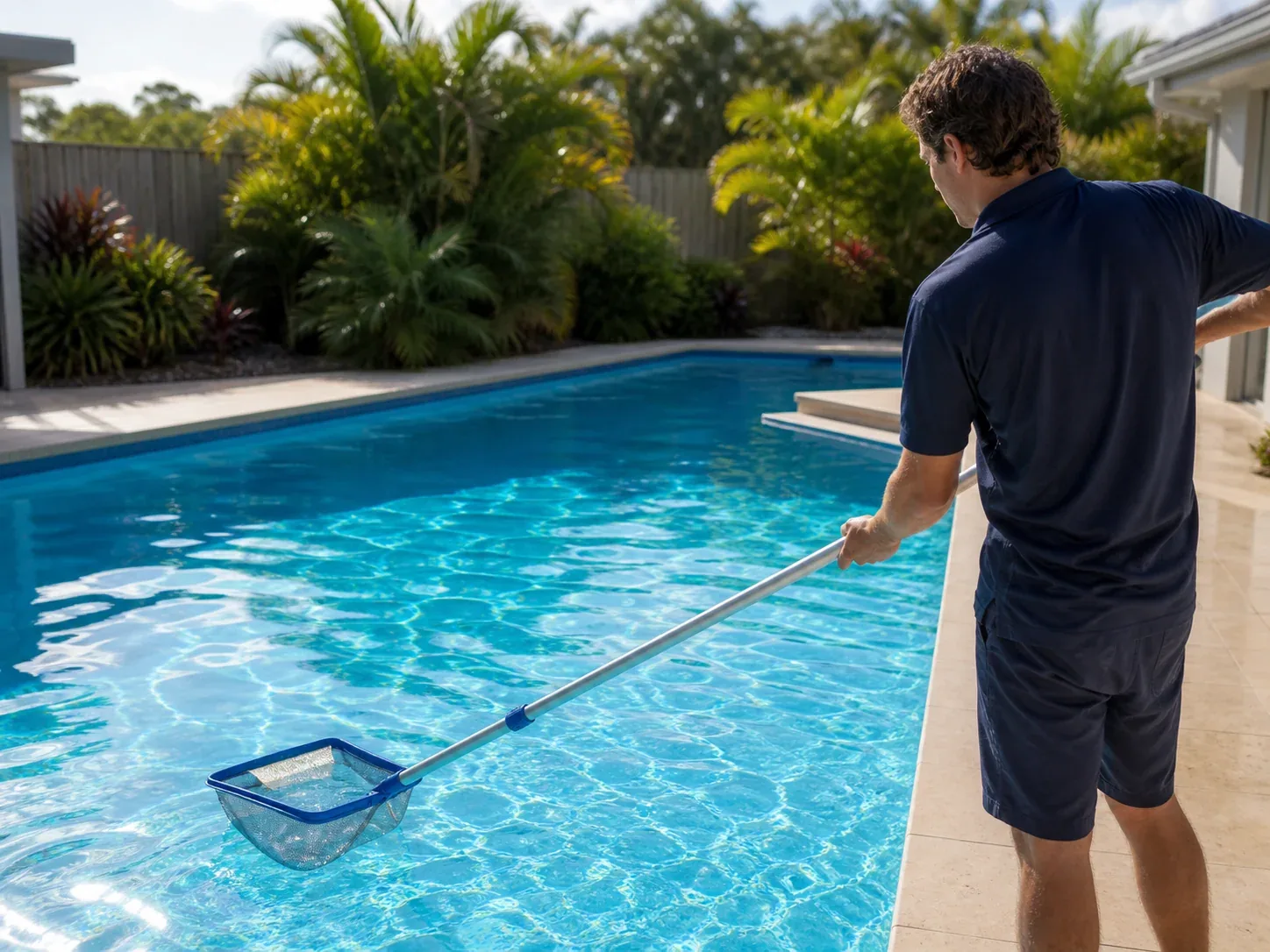
That does not mean “run the biggest pump for as long as possible”. The right flow depends on the pool volume, plumbing, pump, filter, sanitation equipment, features, season and swimmer load. Good circulation is a matched system, not a horsepower contest.

Nik’s simplest explanation is to compare a pool with still water: when debris has nowhere to go, it settles and the water becomes harder to manage. Your job as an owner is not to redesign the hydraulics. It is to notice when the pool no longer behaves like itself.

The situation

Circulation, filtration and sanitation are different jobs
These terms are often blended together, but separating them makes pool problems easier to understand.

Useful pool care

What the normal flow path looks like
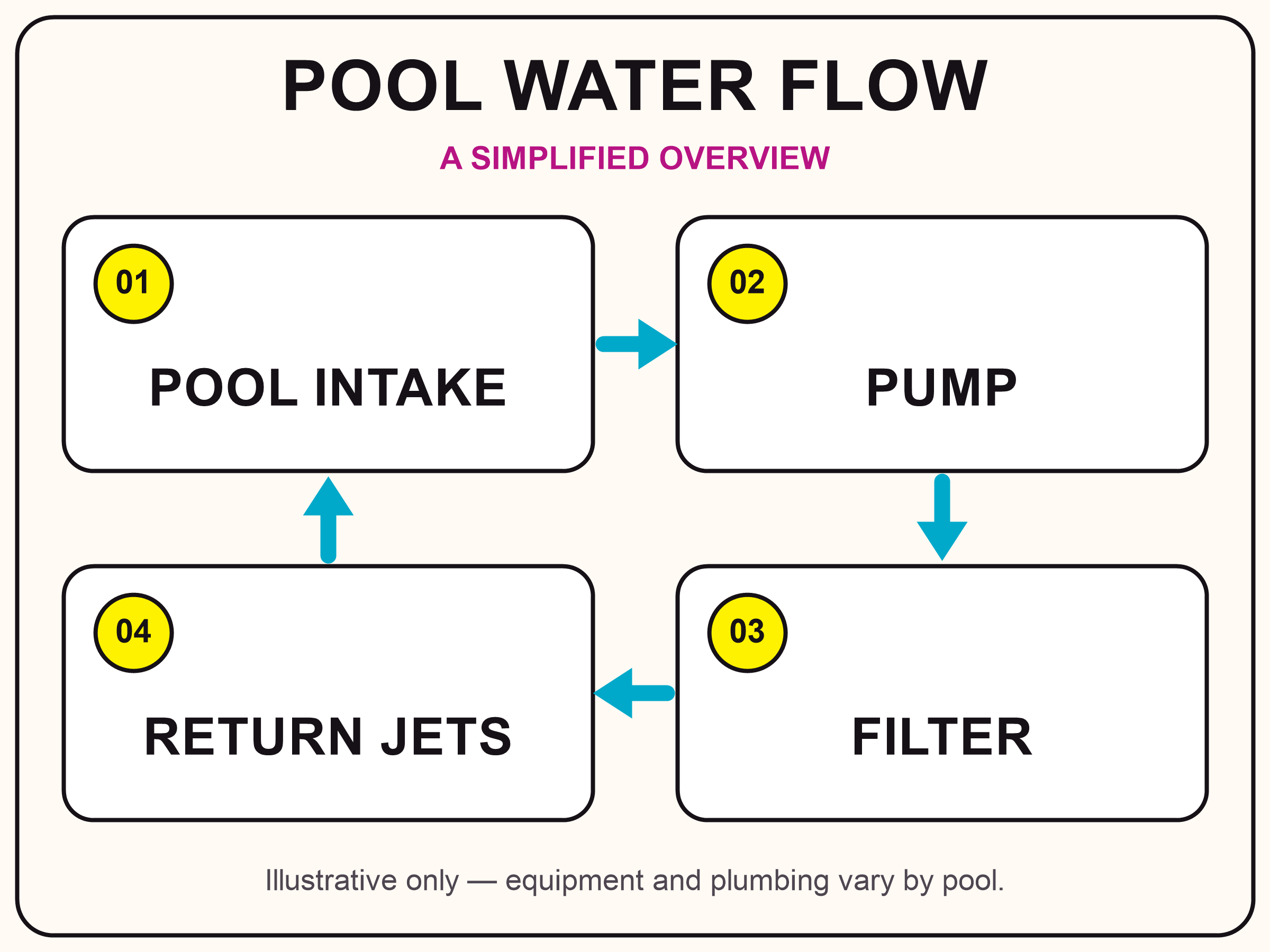
In a common residential arrangement, the sequence is broadly:

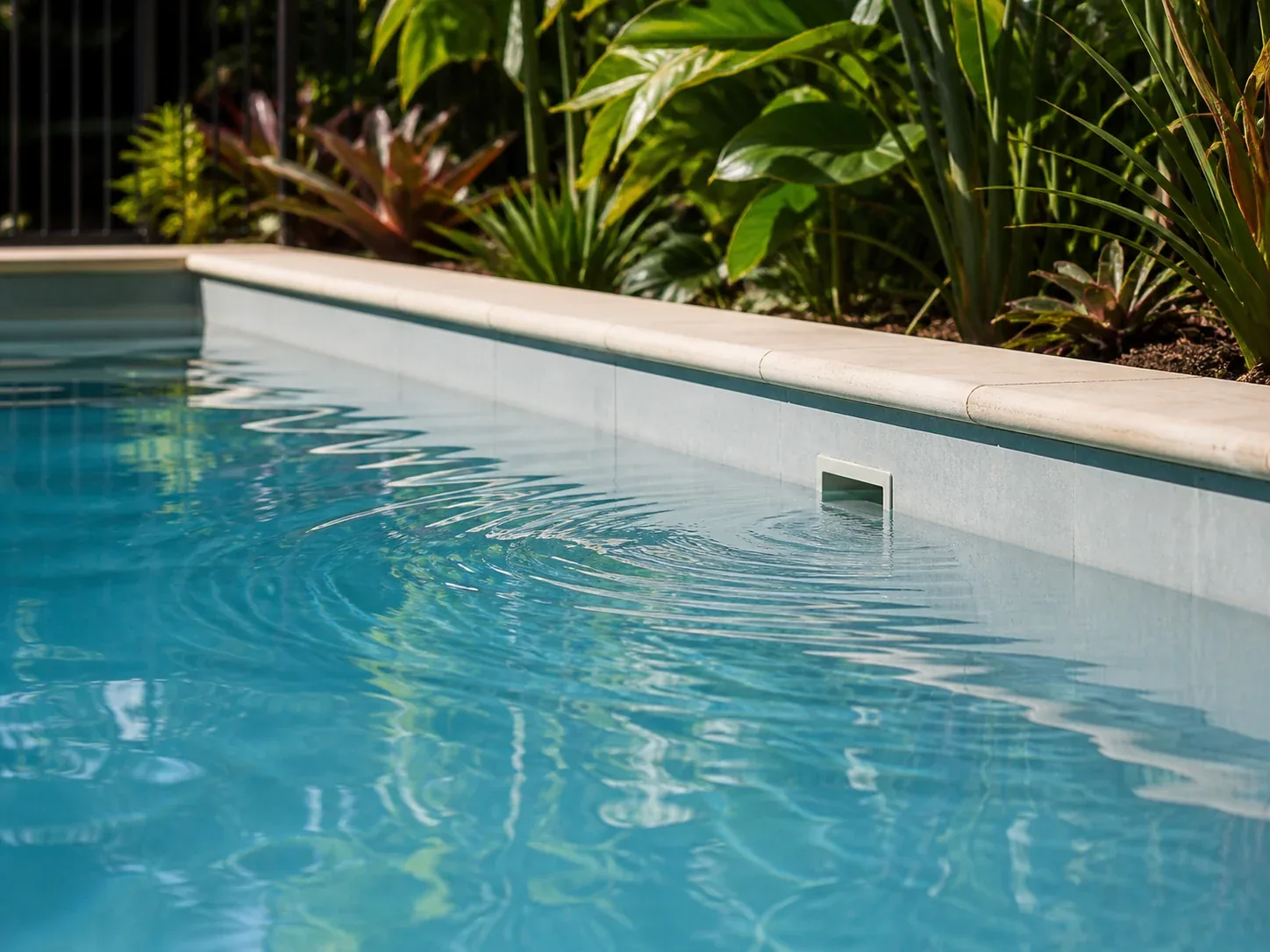
  1. Water leaves the pool through the skimmer and other suction points.
  2. The pump basket catches larger material before it reaches the impeller.
  3. The pump moves water through the filter.
  4. Sanitising, heating or control equipment may sit in the return path.
  5. Return inlets send water back into the pool.

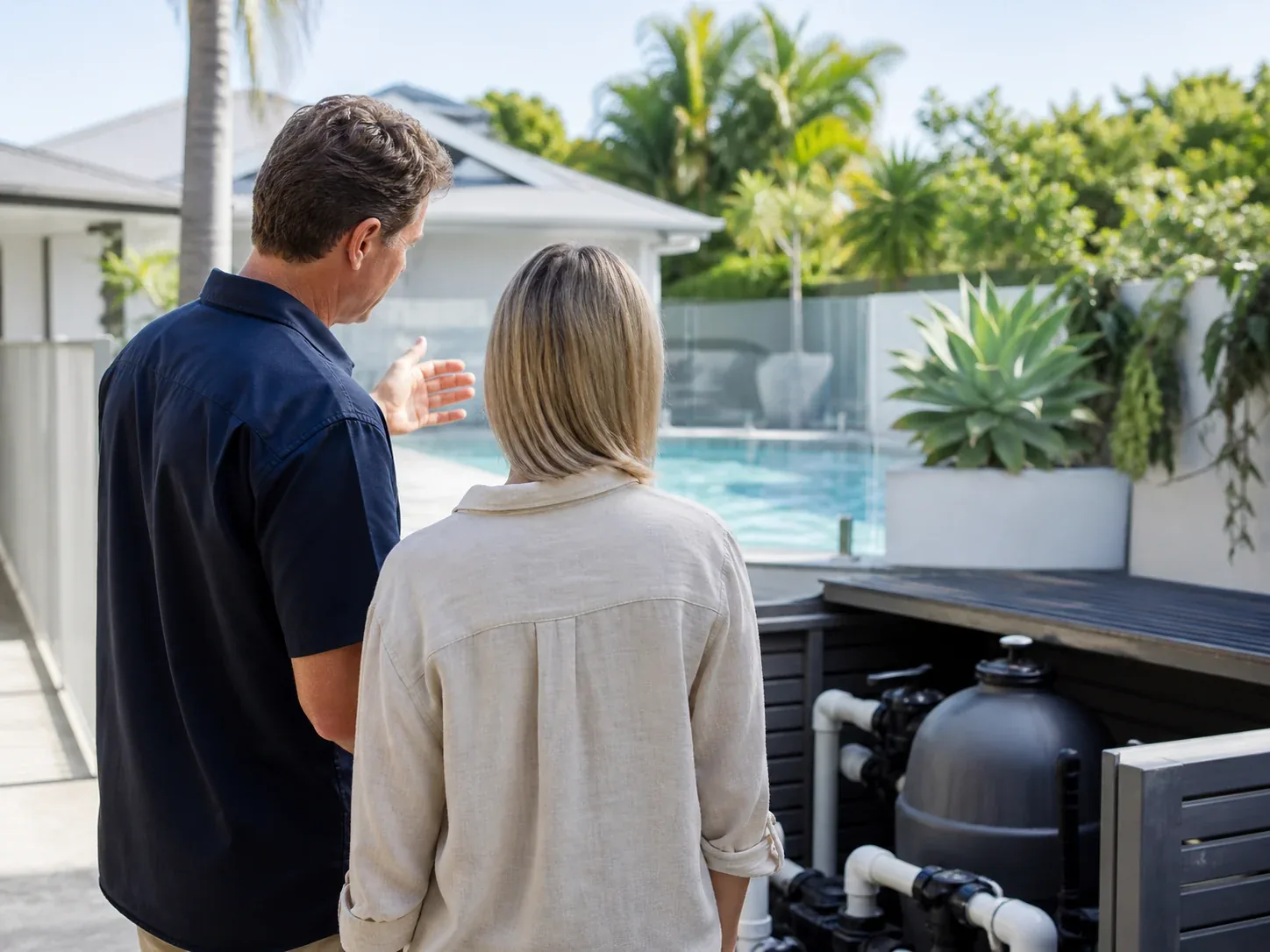
Valves, spas, in-floor systems, solar heating, water features and automation can make the path more complex. If you do not know what a valve controls, do not turn it as an experiment. Photograph the equipment layout and ask for an explanation.

Local lens · from the sand to the hinterland

Why Sunshine Coast pools can lose flow

The local environment changes the load placed on a system.

01

Sand, pollen and fine coastal debris

Near the coast, fine material can enter with wind, feet, pets and garden runoff. It may not look dramatic, but the filter still has to remove it. Fine debris can also make a pool appear dull even when there are few leaves on the surface.

02

Leaf litter and mature gardens

Across leafy coastal and hinterland blocks, baskets can fill quickly after wind or rain. A garden that has grown around the pool can create a very different debris load from the one the original pump and filter were chosen for.

03

Heavy summer rain

Rain can raise the water level, dilute the pool, wash material from surrounds and gardens, and cluster debris at the skimmer. The Bureau of Meteorology’s Sunshine Coast Airport record shows warm summers and substantial rainfall, with February and March among the wetter months. The response still depends on what happened at the individual pool; rain is context, not a chemical diagnosis.

04

More swimmers during hot and holiday periods

Sunscreen, body oils, dirt and a higher swimmer load increase the work asked of circulation, filtration and sanitation. A schedule that was adequate in a quiet month may not reflect a busy week.

05

Construction and landscaping dust

Fine dust may stay suspended or settle in low-flow areas. It can take repeated filtration and cleaning to remove, and it may expose circulation patterns that were less obvious before.

Take this with you

Warning signs worth noticing

1
One sign does not prove one cause, but a change from the pool’s normal behaviour deserves attention.
2
Return flow feels weaker or uneven compared with normal.
3
Surface debris no longer moves towards the skimmer.
4
The cleaner moves slowly, stops or behaves differently.
5
Air appears in the pump lid or returns.
6
The pump loses prime, surges or sounds different.
7
The filter-pressure reading changes noticeably from its clean baseline.
8
A controller shows a low-flow or equipment alert.
9
The water stays cloudy despite cleaning and suitable test results.
10
Algae or debris repeatedly returns to the same area.
11
Heating or sanitation equipment is not receiving the flow it expects.
12
Possible causes include water level, full baskets, a dirty filter, a closed or altered valve, air entering the suction side, a blockage, a worn part, a pump or controller fault, or a mismatch between components. This is why replacing one part before diagnosis can miss the real restriction.

Take this with you

Safe checks a homeowner can make

1
Always follow the equipment manufacturer’s current instructions. If you are unsure, stop.
2
1. Look at the water level
3
Check whether the water sits within the skimmer’s normal operating range. A very low level can allow air into the system. An unusually high level can reduce surface-skimming performance in some pools.
4
2. Look for obvious surface and basket load
5
Remove floating debris where it is safe. Check visible skimmer baskets. Switch equipment off before removing any basket lid and use the correct procedure for the system.
6
3. Check the programmed schedule
7
Confirm the clock, operating mode and recent power interruptions. Do not assume the schedule shown on a controller is the schedule actually being completed if an alert or fault is present.
8
4. Observe the returns and pump
9
Without opening equipment, note the strength of return flow, unusual bubbles, surging, noise or a pump that will not remain primed. A short video can help explain an intermittent symptom.
10
5. Record the filter gauge or display
11
Take a photo and compare it with the pool’s known clean baseline, if one has been documented. A number without that context is harder to interpret, and gauges can fail.
12
6. Note what changed
13
Recent rain, landscaping, a party, a power outage, a chemical addition, a valve change or work by another trade can narrow the possibilities.
14
Stop before you do this
15
Do not open a pressurised filter.
16
Do not work inside electrical equipment or bypass safety devices.
17
Do not mix or add chemicals simply to test a theory.
18
Do not alter unfamiliar valves on a running system.
19
Do not keep restarting a pump that will not prime or sounds mechanically distressed.
20
Do not reach into moving equipment.

Useful pool care

How long should the pump run?

There is no responsible answer that fits every pool.

The Australian Government’s Energy Rating guidance says filtration is critical and notes that a common summer starting point is eight hours, but immediately qualifies that by pool size, pump size and conditions. The same guidance encourages owners to find the lowest acceptable running time for the actual system rather than waste electricity.

Pump selection matters too. Energy Rating advises using the smallest pump suitable for the pool because an oversized pump can increase pressure on the filter, interfere with its operation and shorten its life. Pool pumps use nearly 18 per cent of the electricity in an average Australian home with a pool, so suitability and efficiency matter.

Treat generic hour rules as a starting conversation, not a setting to copy. The correct schedule must also allow connected chlorination, heating, cleaning and water-feature equipment to operate as intended.

Useful pool care

After rain, wind or a busy weekend
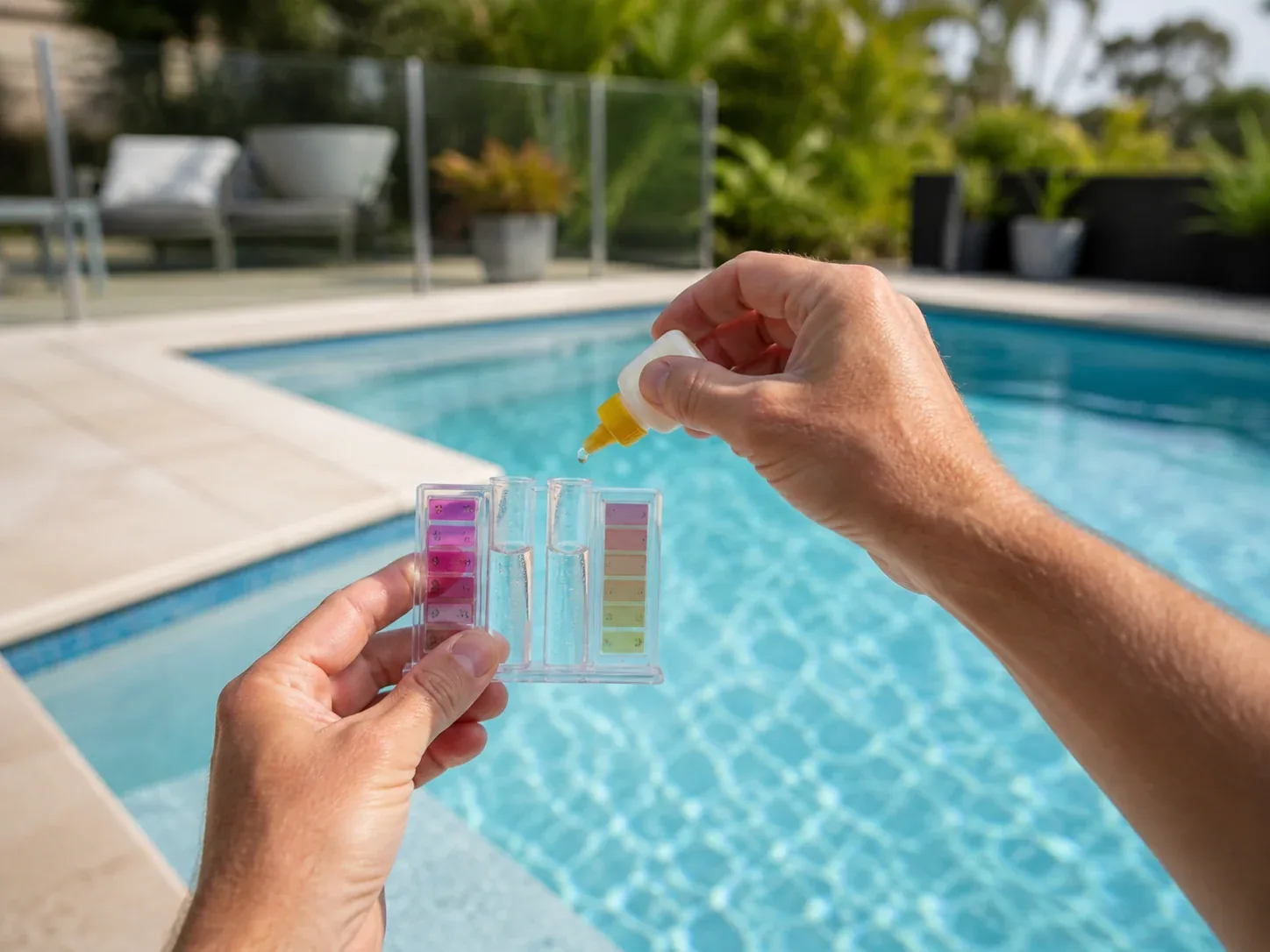
Use a calm sequence:

  1. Remove obvious debris where it is safe.
  2. Check water level, baskets and whether circulation appears normal.
  3. Record any controller message, unusual sound or visible air.
  4. Test the water with suitable equipment or arrange testing.
  5. Follow the product and equipment instructions for the actual result.
  6. Ask for help if flow has changed, the pool is not responding or you are unsure.

Avoid “insurance dosing”. Adding a product without a test or plan can create a second problem and make the original cause harder to see.

Useful pool care

What a good service should explain about flow
When you engage a pool professional, ask them to show you:

  • The normal suction and return path
  • The safe basket and filter routine
  • The clean filter-pressure baseline, where applicable
  • The expected pump schedule and why it suits the pool
  • How the sanitation, heater and cleaner depend on flow
  • The signs that indicate restriction, air or equipment fault
  • What changed if they recommend a new pump, filter or controller
  • How the proposed equipment is sized and what it may cost to run

If the only explanation is “you need a bigger pump”, ask how that conclusion accounts for the filter, plumbing, pool volume and connected equipment.

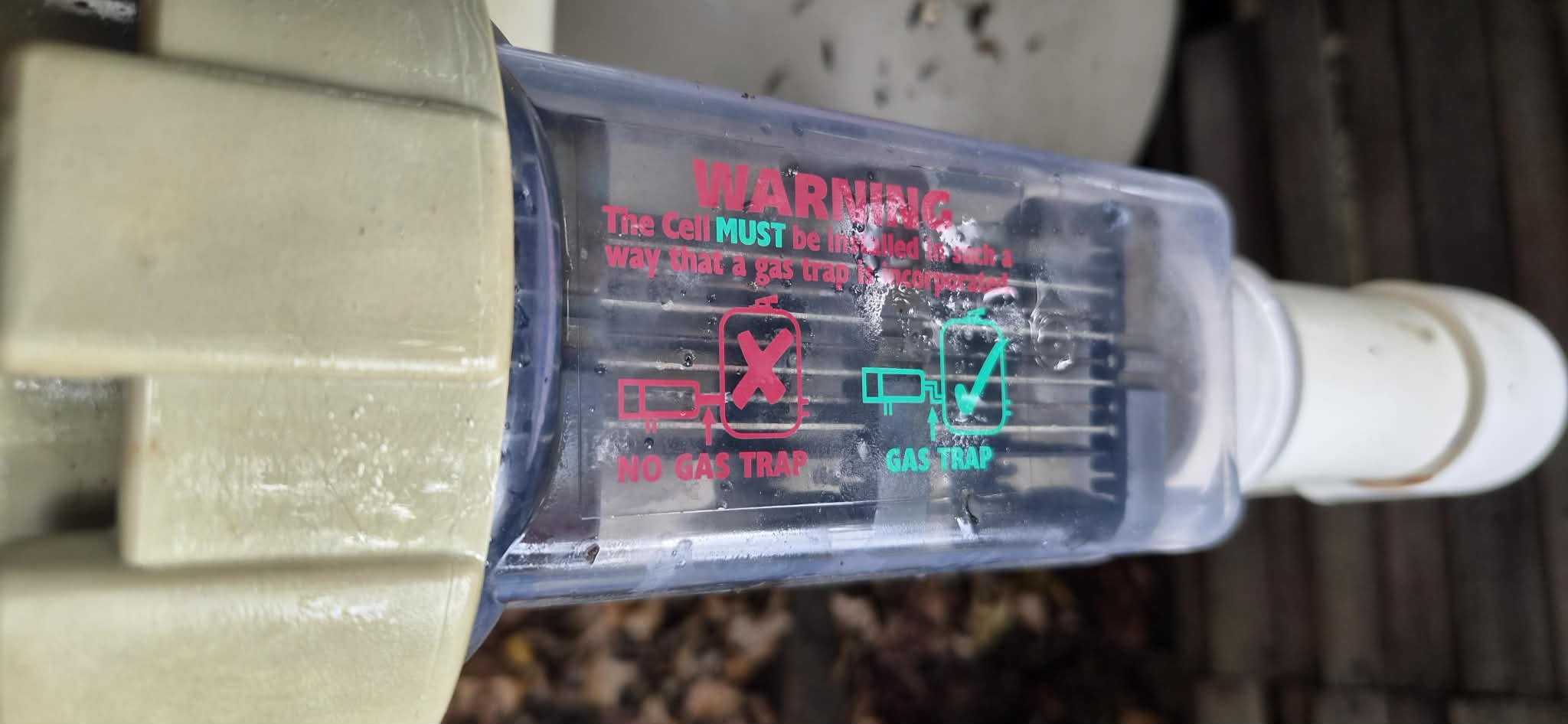
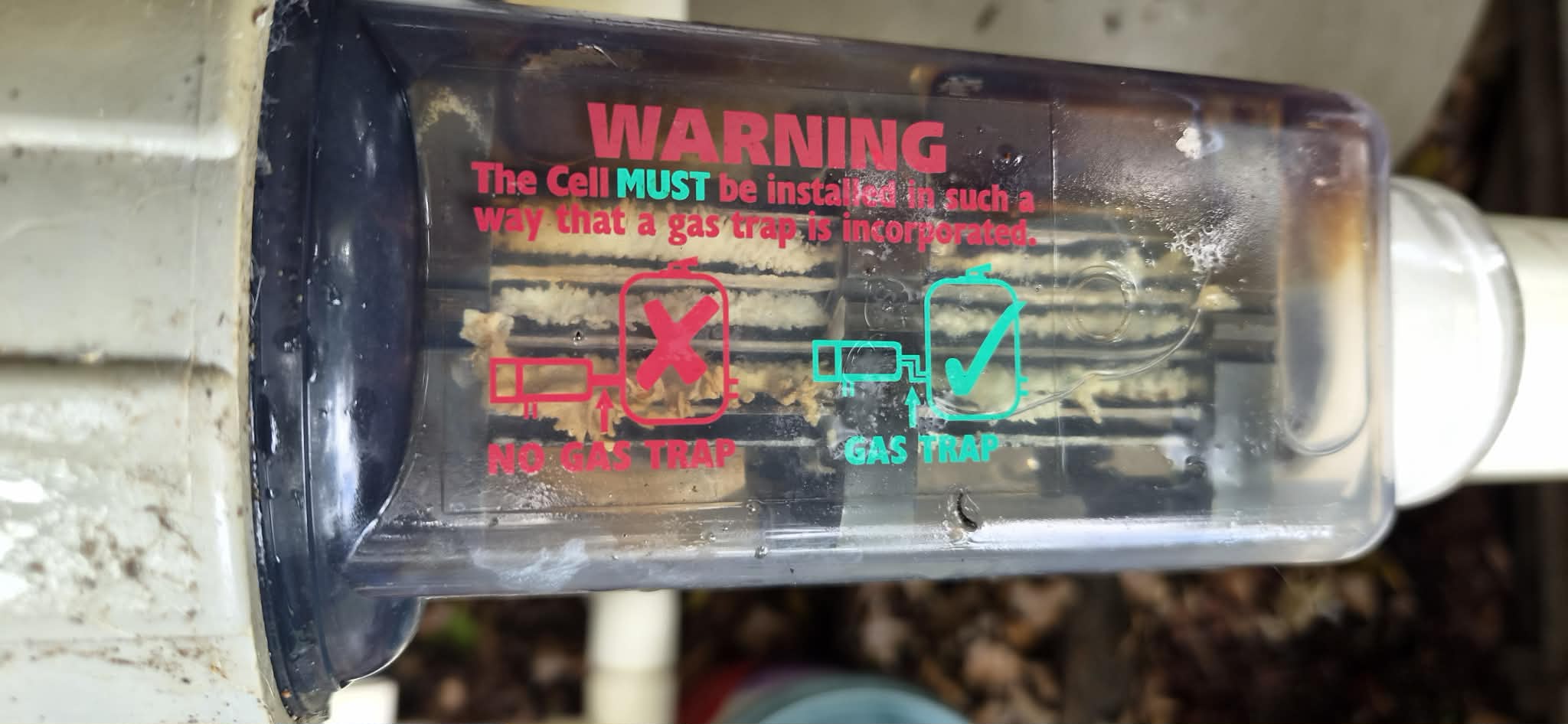
The two photos show a manufacturer’s gas-trap warning on one chlorinator cell. They are examples to discuss with a pool professional, not instructions for changing plumbing or proof that any installation is compliant. Follow the instructions for the equipment at your property.

Take this with you

When to call for help

1
Call when the pump will not prime, repeatedly draws air, leaks, trips power, becomes unusually noisy, runs hot, shows a persistent fault, or produces materially weaker flow. Also call when water stays cloudy or algae returns after the obvious debris and routine care have been addressed.
2
Use a licensed electrician for electrical work and the appropriate qualified trade for plumbing, structural or other licensed work. Do not open or modify equipment outside your competence.

Straight answers

Circulation FAQs

Open each answer before you decide what the pool needs.

Movement alone does not sanitise the pool. Circulation supports filtration and distribution of treated water, while suitable sanitation, water balance and cleaning address other parts of the job.

It may be a quiet circulation area, a surface-cleaning pattern, nearby vegetation, a return-direction issue, brushing/cleaning gap or chemistry problem. Repeated location is useful evidence, but it is not a complete diagnosis.

Not necessarily. A pressure change can indicate a loaded filter, restriction, valve change or gauge problem. The meaningful comparison is with the system’s documented clean baseline and manufacturer instructions.

Off-peak tariffs may help in some homes, and Energy Rating notes timers can support flexible operation. But the schedule also needs to support surface cleaning, sanitation, heating, noise limits and the way the pool is used. Check the actual electricity plan and system requirements.

Only if you know what they control and the correct operating sequence. Incorrect valve changes can stop flow to equipment, isolate a line, affect a spa or create pressure problems. Photograph the layout and have it labelled during a handover.

Air may be entering the system or may be associated with certain equipment. If bubbles are new, persistent or accompanied by loss of prime, record the symptom and arrange an assessment rather than assuming it is harmless.

Send the suburb, a photo of the equipment layout, the controller or gauge, a short video of the return flow or sound, when the change began, recent weather or use, and anything already adjusted. Do not change more settings just to produce more information.

The next useful step

The pool does not need a guess. It needs a useful first look.

Tell Nik what changed and send a photo of the equipment or display if you have one. He will call to work out whether it sounds like routine service, a flow assessment or a different qualified trade. Describe the flow problem | Call Nik

Useful pool care

Sources and review notes

  • Australian Government Energy Rating, “Pool pumps” and “Tips for using your pool pump efficiently”.
  • Queensland Health, “Pools, spas and other recreational water bodies” and *Water Quality Guidelines for Public Aquatic Facilities* (context only; domestic pools are not automatically public aquatic facilities).
  • Bureau of Meteorology, Sunshine Coast Airport climate statistics, site 040861.
  • Nik interview, 2026: water-flow explanation, skimmer/pump basket advice and local sand, pollen and leaf-litter observations.